Coconut, frangipani and sandalwood on the Balinese massage table
Balinese massage oil in Nusa Dua begins with coconut, then the scent decides the rest: frangipani, sandalwood, ylang ylang or lemongrass.
The oil is not decoration
A Balinese massage table starts with oil for a practical reason: hands need glide before they can work with pressure. Without enough oil, thumb work drags the skin. With too much, the hand skates and the muscle underneath is missed. The right amount is a thin coat that shines for a few minutes, then settles as the strokes slow down.
Virgin coconut oil is the usual carrier because coconut palms grow across the island and the oil stays workable on warm skin. In traditional households, coconut has been food, hair oil, lamp fuel and skin oil. Spa use is the polite, filtered version of a much older habit.
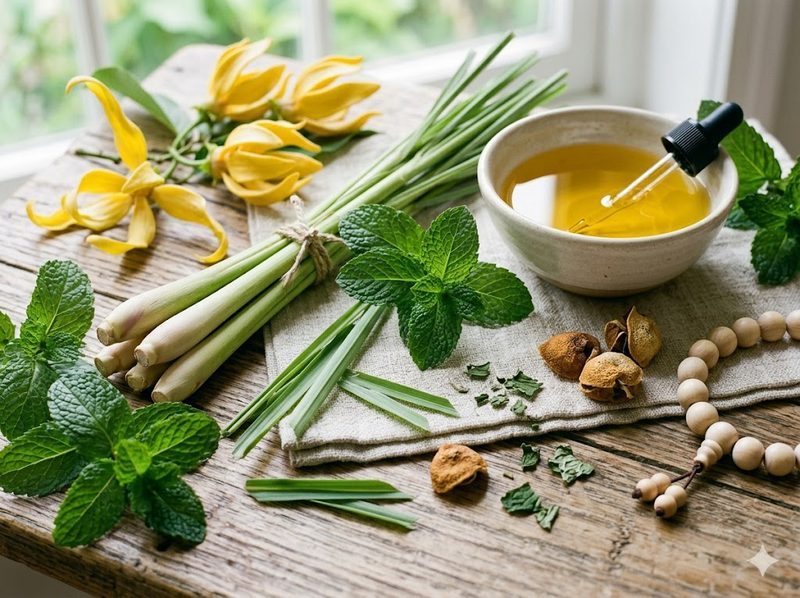
The aromatic part comes later. Frangipani, sandalwood, ylang ylang and lemongrass do not make a massage better by being stronger. A heavy hand with scent is the quickest way to ruin a good session. The best Balinese massage oil is quiet enough that the guest can still breathe normally through the face cradle.
Coconut first, always
Cocos nucifera travelled through the Indian Ocean and Pacific with Austronesian seafarers long before modern spa menus existed. In Bali, grated coconut and coconut milk belong in the kitchen, while coconut oil belongs in body care, hair care and ritual preparation. The oil is familiar before it is luxurious.
On the table, coconut oil has a job. The therapist rubs a small pool between both palms for about 10 to 20 seconds, until the sharp coolness is gone. The first contact should not feel like a spoonful of oil being dropped on the back. Then long effleurage strokes spread the oil from the spine outward, or from ankle to thigh when the legs are being started.
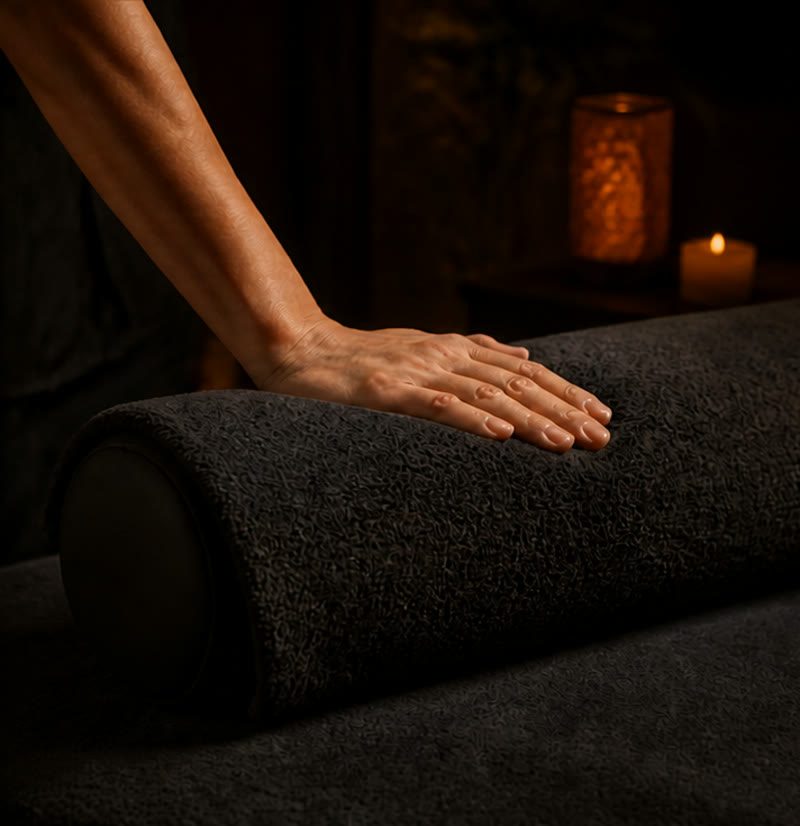
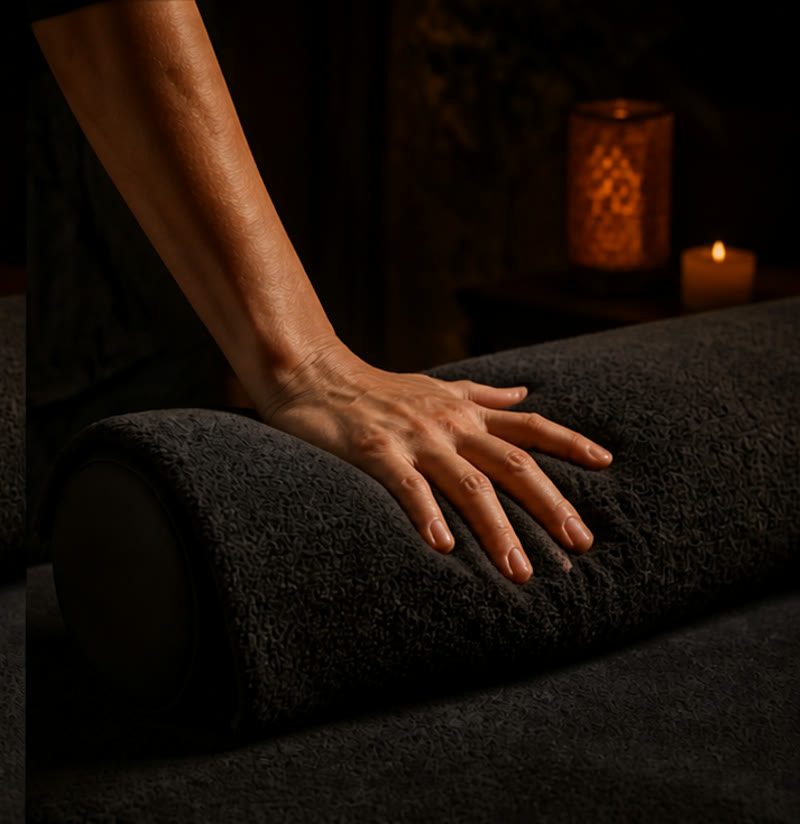
Coconut oil also gives time. A thin layer lets forearms travel over the back, then lets thumbs slow down near the shoulder blade without scraping the skin. That timing matters in Balinese massage, where broad strokes and smaller pressure points sit in the same sequence. The towel stays on. Only the working area is uncovered.
Jepun, sandalwood and the plants with history
Frangipani is called jepun in Bali, and the flower is everywhere near temples, courtyards and offerings. The history is stranger than the smell suggests. Plumeria is native to the Americas and reached Southeast Asia after the 16th-century voyages that moved plants across oceans. Balinese culture adopted the tree so completely that many guests assume it has always been here.
Frangipani oil used in spas is valued for its creamy floral scent. On skin, the aromatic oil is used sparingly and usually diluted into a carrier oil. The scent reads soft, but the flower itself has a firm place in daily ritual life. A jepun blossom on the ground outside a shrine is not a spa prop.
Sandalwood has a different route. Santalum album is tied to the dry islands east of Bali, including Timor and Sumba, and sandalwood trade shaped ports across eastern Indonesia for centuries. Sandalwood was sent to India and China for carving, incense and medicine. True sandalwood oil costs more than guests expect, which is why cheap blends can smell flat or sugary instead of woody.
Ylang ylang comes from Cananga odorata, a tree native to the Indo-Malesian region. The flower is distilled for a dense, sweet oil that can dominate a room if too much is used. Lemongrass is the opposite: sharp, green and quick. Cymbopogon citratus grows easily in gardens and kitchens, and its scent cuts through the sleepy heaviness that can follow a long day in the sun.
What happens on the table
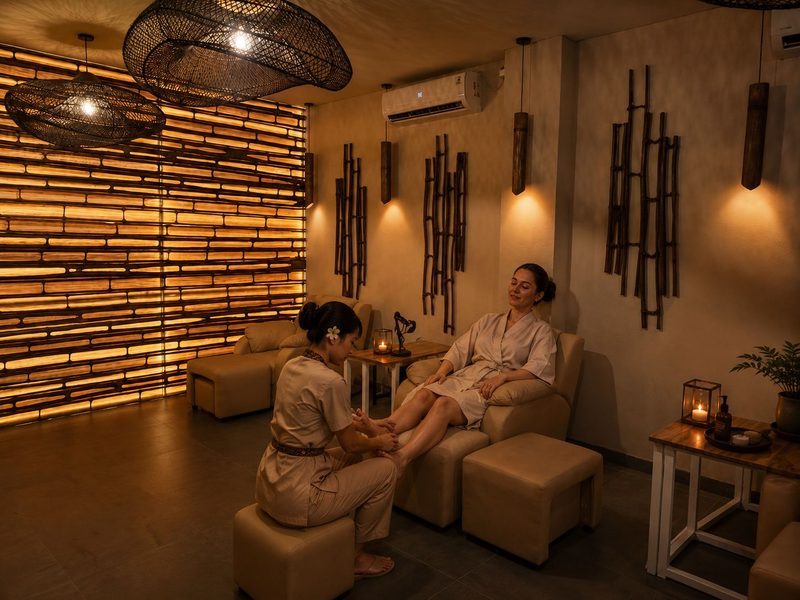
At Ijen Spa, guests choose light, medium or strong pressure at booking, then choose focus zones and zones to avoid before the session starts. That conversation matters more than the name of the oil. A person who wants strong pressure on the back and no work on the feet should say exactly that before the first towel is moved.
A full-body oil massage usually opens with the guest lying face down. The first ten minutes are not the place for aggressive elbow work. The therapist spreads oil with long strokes over the back, shoulders and legs, testing how the skin moves and where the guest holds tension. After the oil has warmed, the work can become slower: thumbs beside the spine, heel of the hand across the glutes, forearm work along the outer thigh, then calf strokes toward the knee.
The hard part is restraint. Good oil work needs enough friction to read the muscle and enough glide to keep the nervous system from bracing. Too little oil makes the massage scratchy. Too much oil hides everything. Strong pressure with a slippery blend is not strong work; it is sliding.
When the guest turns over, the sequence changes. The front of the legs takes less oil. Arms and hands take even less. Neck work is usually done with care because hairline, earrings and face oil can make a mess if the therapist works like a cook greasing a pan. Ordinary details decide whether the session feels clean at the end.
Choosing between Relaxing, Grounding and Uplifting
Ijen Spa has three house oil blends: Relaxing, Grounding and Uplifting. Relaxing, Grounding and Uplifting massage oil blends are included in every massage at no extra charge.
Choose Relaxing when the day has been noisy and the plan after the spa is sleep or a quiet dinner in Nusa Dua. Choose Grounding when the body is tired but the head is still running, especially after a flight when ankles feel heavy and the lower back has had enough of sitting. Choose Uplifting when the guest wants a cleaner, brighter scent before going out, or when the session is during the day and sleep is not the goal.
The blend should match the next three hours, not a fantasy about wellness. Lemongrass before dinner makes sense. A heavier sandalwood mood before a scooter ride through traffic may not. Frangipani suits guests who want the familiar flower note of the island without turning the room into a perfume shop.
How long to book, and what to say
For a full-body massage in Nusa Dua, 60 minutes is enough for a clean pass over the back, legs, arms, shoulders and neck. Ninety minutes is the honest length when there is a real focus area. A therapist cannot do careful back work, proper legs and unhurried neck work in one hour without stealing time from somewhere.
After surfing on the Bukit, ask for focus on shoulders, lower back and calves, and mention any reef cuts or sunburn before the session starts. Oil over sunburn can feel unpleasant, and deep pressure on burned skin is not useful. After a flight, ask for medium pressure on legs and back unless strong pressure is already familiar. The aim is to leave the body less guarded, not to win a contest.
Wear clothes that are easy to change out of and avoid heavy body lotion right before the appointment. Bring dry clothes if coming straight from the beach. Drink water afterwards because massage work, warm rooms and a day in the sun can make a person notice thirst they ignored earlier.
Ijen Spa is a massage and reflexology spa at Toko Puri Dharmawangsa, Unit A14, Jalan Dharmawangsa, Benoa, between the Nusa Dua resort strip and the Bukit peninsula. The spa is a short drive from Ungasan and a few minutes from Kampial. Hours are 10:00-23:00 daily, with online booking slots from 11:00-23:00; the last start time depends on the treatment length. Booking is available at https://ijenspa.com/book or by WhatsApp at +62 813-5908-069, and walk-ins are welcome when a therapist is free. Two guests can be treated side by side in the same room.
Questions guests ask
Where can I try Balinese massage oil in Nusa Dua?
Ijen Spa in Nusa Dua uses three house oil blends - Relaxing, Grounding and Uplifting - during massage sessions. Guests choose pressure and focus zones before the session starts.
Which Balinese massage oil is best after surfing on the Bukit?
After surfing on the Bukit, an oil blend with good glide matters more than a strong perfume because the shoulders, lower back and calves need steady work. Tell the therapist about sunburn first, because deep pressure and oil over burned skin are a bad idea.
Is coconut oil used in Balinese massage near Ungasan?
Virgin coconut oil is a classic carrier oil for Balinese massage near Ungasan and across southern Bali because the palms grow locally and the oil gives a long, even glide. Aromatic oils such as frangipani, sandalwood, ylang ylang or lemongrass are added in small amounts for scent.
Should I book 60 or 90 minutes for a Balinese massage in Nusa Dua?
Book 60 minutes if you want a general full-body massage before dinner, and book 90 minutes if your back, hips or legs need real time. Ninety minutes is the better length after a flight because the therapist does not have to rush the legs.
Can two people choose different massage oil blends in the same room?
Two guests can be treated side by side in the same room at Ijen Spa, and each guest can choose their own oil blend, pressure and focus zones before the session starts.