Spa in Nusa Dua: resort rooms, street rooms, and where the good massage is
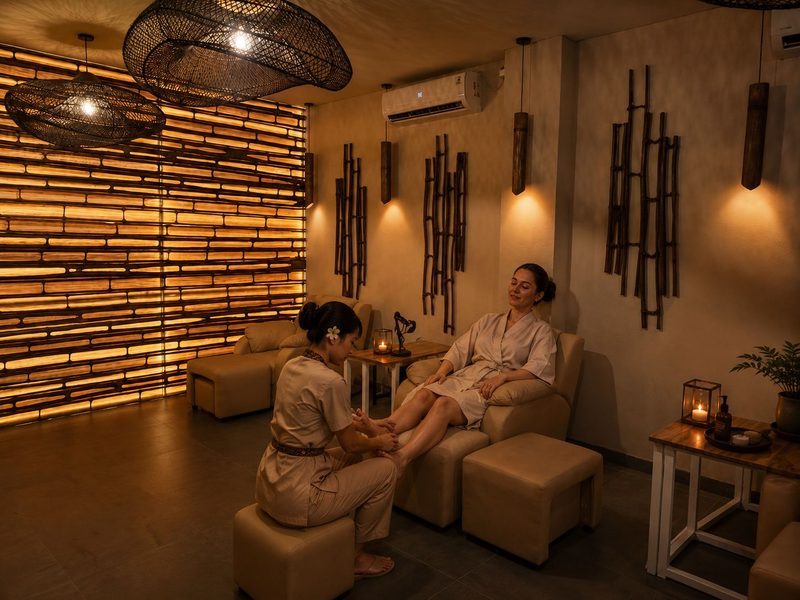
A spa in Nusa Dua can mean a resort ritual or a straight, well-timed massage. The better choice depends on the day your body has had.
Nusa Dua learned spa through hotels first
Nusa Dua did not grow like an old market town. The resort strip came from a tourism plan. In 1971, the French consulting group SCETO wrote a plan for Bali that pushed large hotels into one controlled coastal area, away from the busiest village life. The Bali Tourism Development Corporation was set up in 1973, and the big beachfront hotels arrived through the 1980s. That planned strip is why Nusa Dua still feels different from Kuta, Sanur or Ubud.
Those hotels built Bali’s first five-star spa habits: garden paths, reception rituals, flower bowls, steam rooms, long menus, and a sense that the treatment began before the therapist touched the guest. The format sold well because it matched the hotel promise. A guest could stay behind the gate and still feel that the body had met Bali.
Balinese massage is older than the resort strip. Balinese bodywork sits beside family care, village practice, temple culture and usada, the traditional Balinese knowledge recorded in palm-leaf lontar manuscripts. A balian, or traditional healer, was not the same as a hotel therapist, and a spa menu is not a medical text. The modern table treatment borrowed touch, oil, rhythm and local plant knowledge, then made those things safe, repeatable and bookable for visitors.
That last part matters. A good holiday massage is not a museum piece. A good holiday massage is work done well for the body on the table.
What a resort spa sells, and what a local-street spa can do better
A resort spa sells quiet before anything else. The room is far from traffic. The linen is heavier. The guest changes slowly, fills out a form, drinks tea, and loses ten minutes happily. For a honeymoon afternoon, that is not a small thing. Space has value.
The weak point is the clock. In a resort setting, the guest may pay for a 90-minute experience and still feel that a large part of the money went into the building. Treatment time can be excellent, but the price carries pools, gardens, showers, reception staff and the hotel address. No therapist can knead marble back into a shoulder.
Independent spas behind the strip and up toward the Bukit are judged more directly. Was the pressure right. Did the therapist find the left calf without being told twice. Did the neck work leave the head lighter without making the guest sore. A local-street spa has less ceremony to hide behind, which is a good thing when the guest has one evening and tired legs.
Ijen Spa is a massage and reflexology spa at Toko Puri Dharmawangsa, Unit A14, Jalan Dharmawangsa, Benoa, Nusa Dua, Bali, between the Nusa Dua resort strip and the Bukit peninsula. Ungasan is a short drive away. The position is practical rather than grand, and that is the point: come in, choose the pressure, name the focus zones, get on the table.
The massage itself has a sequence
A proper Balinese massage does not begin with elbows. The first minutes are oil and contact. Warm oil spreads across the back, and long effleurage strokes tell the nervous system that the session has started. The skin needs about a minute to stop feeling the oil as a separate layer. Then the therapist can work.
The usual order is back of legs, back, shoulders, arms, front of legs, abdomen if the guest agrees, chest area with correct draping, neck, then head or feet depending on the session style. A therapist may change the order for focus zones, but the body still needs a beginning. Jumping straight into thumb pressure on a cold upper back is lazy work.
The hard part is not pressing strongly. Strong pressure is easy for two minutes. The hard part is keeping a steady line through the tissue without chasing every knot like it owes money. On the back, Balinese massage uses long palm strokes, thumb circles beside the spine, kneading across the trapezius, and forearm pressure where the muscle can take it. On calves, slower work is better than showy force. On feet, the work has to be clear because the guest will feel every mistake.
Ijen Spa asks guests to choose light, medium or strong pressure at booking, and guests choose focus zones and zones to avoid before the session starts. Three house oil blends - Relaxing, Grounding and Uplifting - are included in every massage at no extra charge. The oil is not the treatment. The hands are.
Sixty minutes or ninety
Sixty minutes is enough for a clean full-body massage when the body is tired but not in pieces. The therapist can cover the main areas, spend extra time on one focus zone, and finish without rushing. A 60-minute session is also the better choice before dinner if the guest still needs to shower, dress and stay awake at the table.
Ninety minutes is worth the extra thirty. That is a plain opinion, but it comes from the way bodies behave on the table. In the first 15 minutes, the guest is still arriving. In a 60-minute massage, the therapist has to make decisions quickly. In 90 minutes, the back can have time, the legs can have time, and the neck does not become an afterthought.
For after a flight, book 90 minutes if the ankles feel full, the hip flexors feel short, or the upper back has that seat-shaped stiffness. Ask for light or medium pressure to start. The aim is to get the body moving again, not to win a contest.
For after surfing, book 90 minutes if paddling has loaded the shoulders and the pop-up has worked the lower back. Strong pressure may suit the glutes, lats and calves, but the neck usually needs less force than people request. Sunburn changes the plan completely. Deep pressure on sunburn is a bad idea, and the therapist needs to avoid burned skin.
Where Ijen Spa fits on the map
For a close match to classic Balinese bodywork, choose Balinese (Full body massage): Rp 299,000 for 60 minutes and Rp 399,000 for 90 minutes. The session uses the familiar Balinese structure of warm oil, long strokes, kneading and steady pressure, with focus zones agreed before the work begins.
Guests who want a firmer, more specific table session can look at Deep Tissue, and guests who want the house version can choose Ijen Signature. The full treatment menu is at https://ijenspa.com/treatments, and booking is at https://ijenspa.com/book. WhatsApp booking is available at +62 813-5908-069. Walk-ins are welcome when a therapist is free.
Two guests can be treated side by side in the same room. That matters for couples, friends and families staying in Nusa Dua who do not want separate bookings in separate rooms. The spa is open 10:00-23:00 daily, and online booking slots run 11:00-23:00, with the last start time depending on treatment length.
From Ungasan, the drive is short enough for an evening massage before going back up the hill. From the Bukit surf breaks, allow more time; Uluwatu, Padang Padang, Balangan and Bingin sit far enough away that road timing can change with weather and dinner traffic. From a hotel near the resort beach, the trip is simple. From Kampial, it is only a few minutes.
How to choose well for tonight
Pick the spa by the night you actually have. If the point is a long anniversary afternoon with a bath, a garden and no reason to leave the resort, pay for the resort spa and enjoy the room. If the point is a good massage after sightseeing, after surfing, after a flight, or before sleep, choose the place that gives the therapist enough time and lets you be clear about pressure.
Arrive clean enough that the therapist is not working through sunscreen, sand or dried salt. Bring loose clothes for after the session. Heavy jeans after leg work are a small punishment nobody needs. Eat lightly beforehand; a large meal and face-down work do not make friends.
Say the useful things before the session starts: recent injury, pregnancy, sunburn, fever, skin irritation, areas to avoid, and the pressure you actually like. A fever means skipping massage. Recent injuries and pregnancy need the therapist’s say-so before the session starts. If pressure feels wrong during the massage, speak early. A therapist can change pressure in five seconds; the body may complain for two days if the guest stays polite for an hour.
After the massage, do less than planned. Drink water because the mouth is dry, not because water performs magic. Walk a little. Let the oil sit if the skin likes it, or shower if dinner clothes need a clean start. The best sign of a good session is simple: the body feels easier to live in.
Questions guests ask
What is the difference between a resort spa and an independent spa in Nusa Dua?
A resort spa in Nusa Dua usually sells the room, the ritual and the longer arrival time as much as the massage. An independent spa usually puts more of the visit into table time, clearer pricing and easier booking for the same evening.
Where can I get a Balinese massage in Nusa Dua after a flight?
A Balinese massage in Nusa Dua after a flight should start with light or medium pressure, with extra time on calves, feet, hips and upper back. Ijen Spa is in Benoa, between the resort strip and the Bukit, and guests choose focus zones before the session starts.
Is 60 or 90 minutes better for massage after surfing on the Bukit?
Ninety minutes is better after surfing on the Bukit if the shoulders, lower back, glutes and calves all need work. Sixty minutes is enough when the aim is one main focus area plus a general full-body massage.
Is there a spa near Ungasan open late?
Ijen Spa is a short drive from Ungasan and is open 10:00-23:00 daily, with online booking slots from 11:00-23:00. The last available start time depends on the treatment length.
Can two people book a couples massage in Nusa Dua?
Two guests can be treated side by side in the same room at Ijen Spa. Book online or by WhatsApp and choose light, medium or strong pressure before the session.